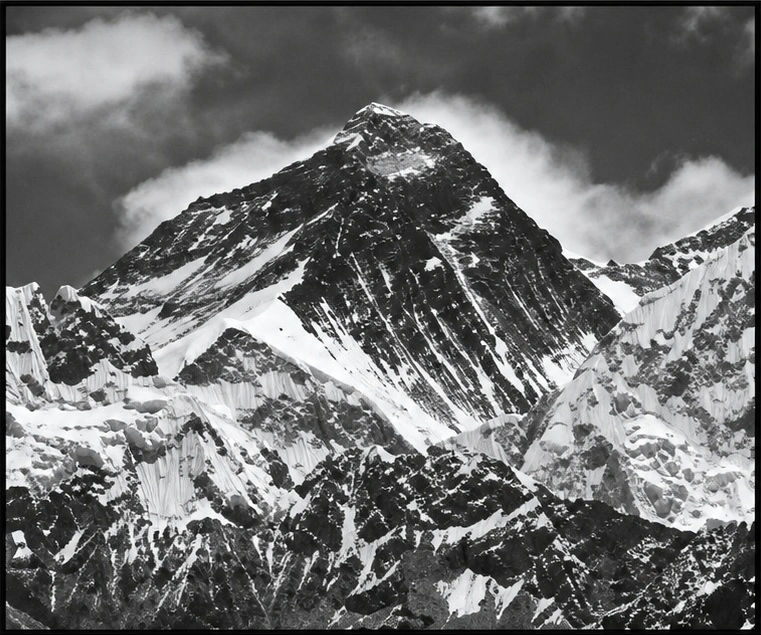
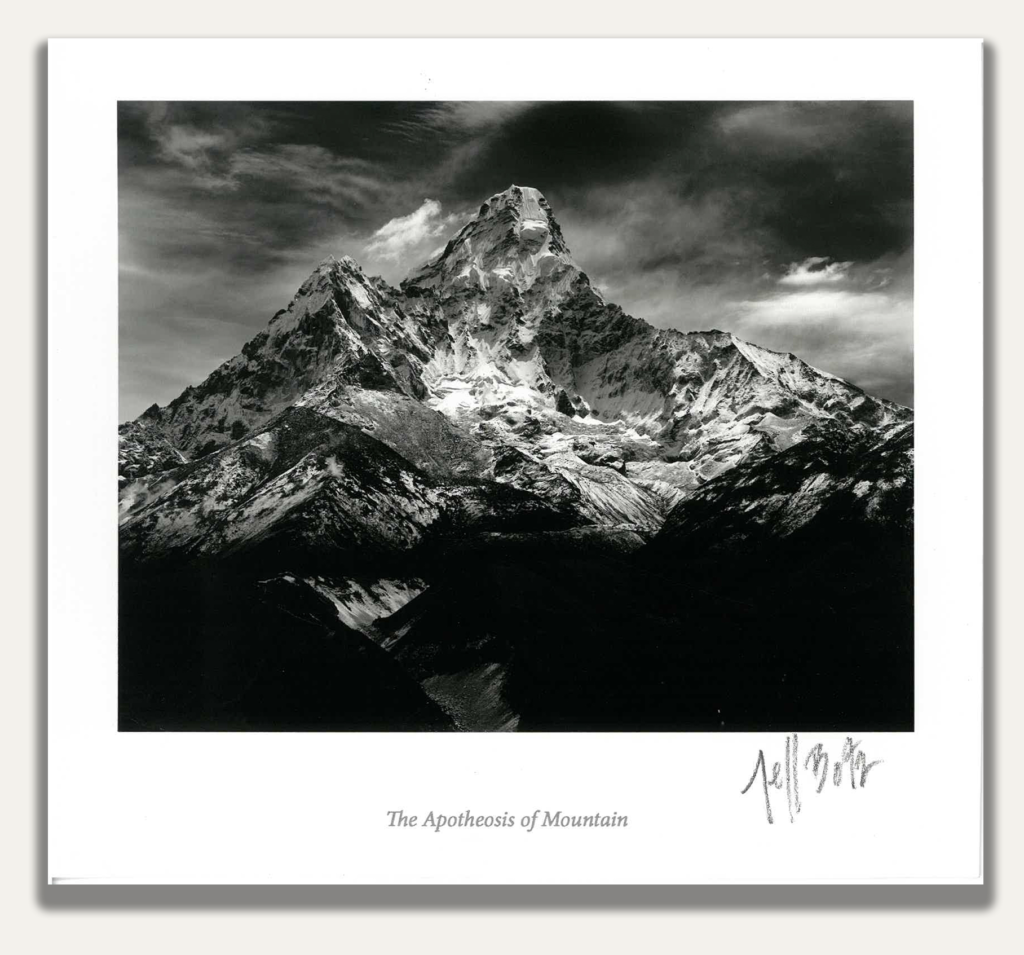
A classical photo essay about the Himalayas — and more than that, a love letter to those mountains and to the people and culture of the land around the world’s tallest peak.
8 × 10
Large format film
Black & White
In the tradition of Ansel Adams
Nepal & Tibet
Twenty-mile radius of the summit
The Book
Everest Not Everest
This is not another collection of travel, documentary or adventure photos, but a personal, poetic visual response to one of the world’s most dramatic landscapes. The photographs were made with the same large-format film technology used in the nineteenth and early twentieth century to illustrate the untamed American West — a technology that never reached the Himalaya, because the borders of Nepal and Tibet were closed to all foreigners.
Two accompanying essays, Everest Not Everest and Awe, give the history of the mountain’s name and question the legitimacy of the British name “Mt Everest.”
“I’ve seen a lot of photography of natural wonders and little of it moves me. I suppose, like most of us, my sensibilities have been dulled by the National Geographic aesthetic of what I might call the ‘informative sublime.’ Remarkably, the best of your images transcend that model.”
John Coffey
Curator of American and Modern Art, North Carolina Museum of Art
Photographs
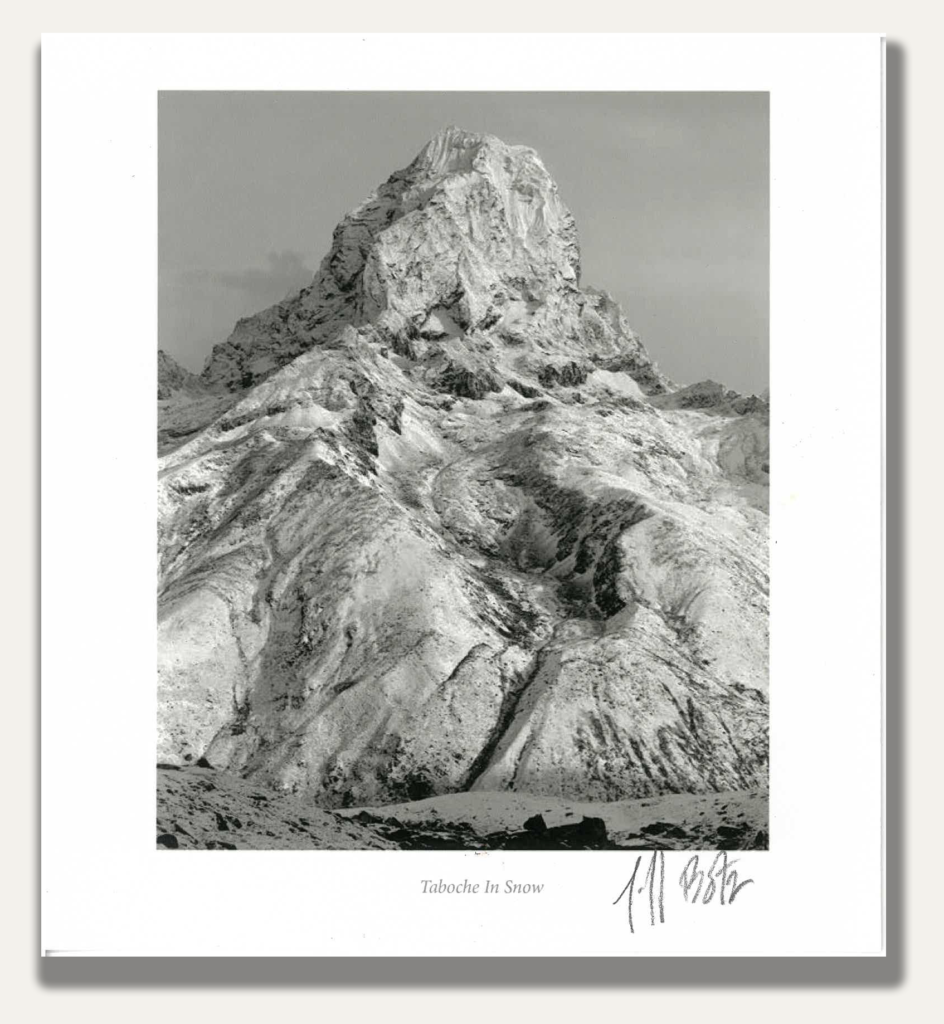
Mountains of the Khumbu and beyond
Made on 8×10 sheet film with a Deardorff view camera. No Photoshop effects — a tradition of straight photography that predates digital altogether.
The mountain had names for centuries before the British gave it one.
Nepal
Sagarmatha
“Goddess of the Sky”
The Nepali name, used on the southern side of the mountain, in the Khumbu, where the photographs in this book were made.
Tibet, China
Qomolungma
“Holy Mother”
The Tibetan name, used on the northern side, in the Chinese Autonomous Region of Tibet, since time immemorial.
1816
Nepal closes its borders to all foreigners. The great era of exploration photography never reaches the Himalaya.
1857
The British name the peak after George Everest — a mountain on the border of two countries neither of which would let them in.
Today
The colonial name still brings prestige and money to Britain, and none to Nepal or Tibet. The book asks readers to use the local names.
“Please read the essays and recognize the indigenous naming traditions. Fairness in this respect is cheap but valuable.”
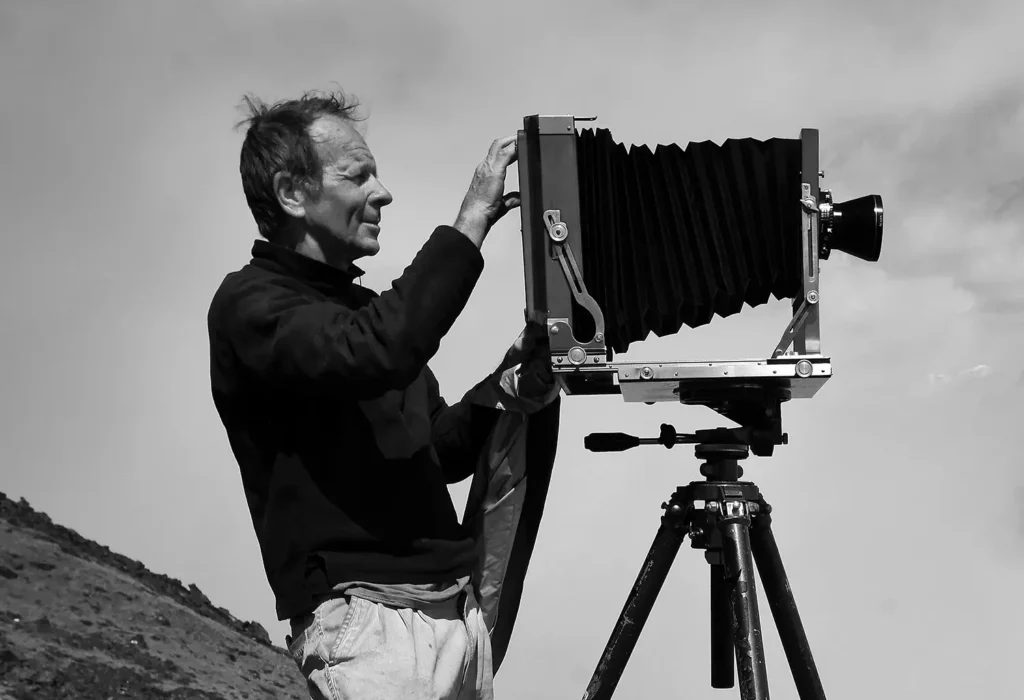
At work in the Himalaya
The Photographer
Jeff Botz
Jeff first walked into the Kingdom of Nepal in 1973, a 24-year-old adventurer. He has returned more than a dozen times since.
He began with 35mm color film and found it too small for the majesty of the mountains. In 1998 he returned with an 8×10 view camera built from a kit, to make photographs in the grand style of the American master, Ansel Adams — landscapes that transcend documentation and travelogue.
A former dye-transfer color printer in New York City, he now works in the Himalaya with a Deardorff 8×10 camera and black and white sheet film.